
TWO WORLDS - ONE PERSON
What does it mean to belong to two worlds while remaining one person?
This collection explores the complexities of identity, belonging and the experiences that shape who we are. It reflects the ways different cultures, histories and influences can exist within one person, sometimes in harmony, sometimes in tension.
Through contemporary art, I explore the layers of identity that make us who we are, challenging the idea that we must fit into a single category or choose one part of ourselves over another.
Because identity is rarely simple. It is personal, evolving and uniquely our own.
Two worlds. One person. Many layers of identity.
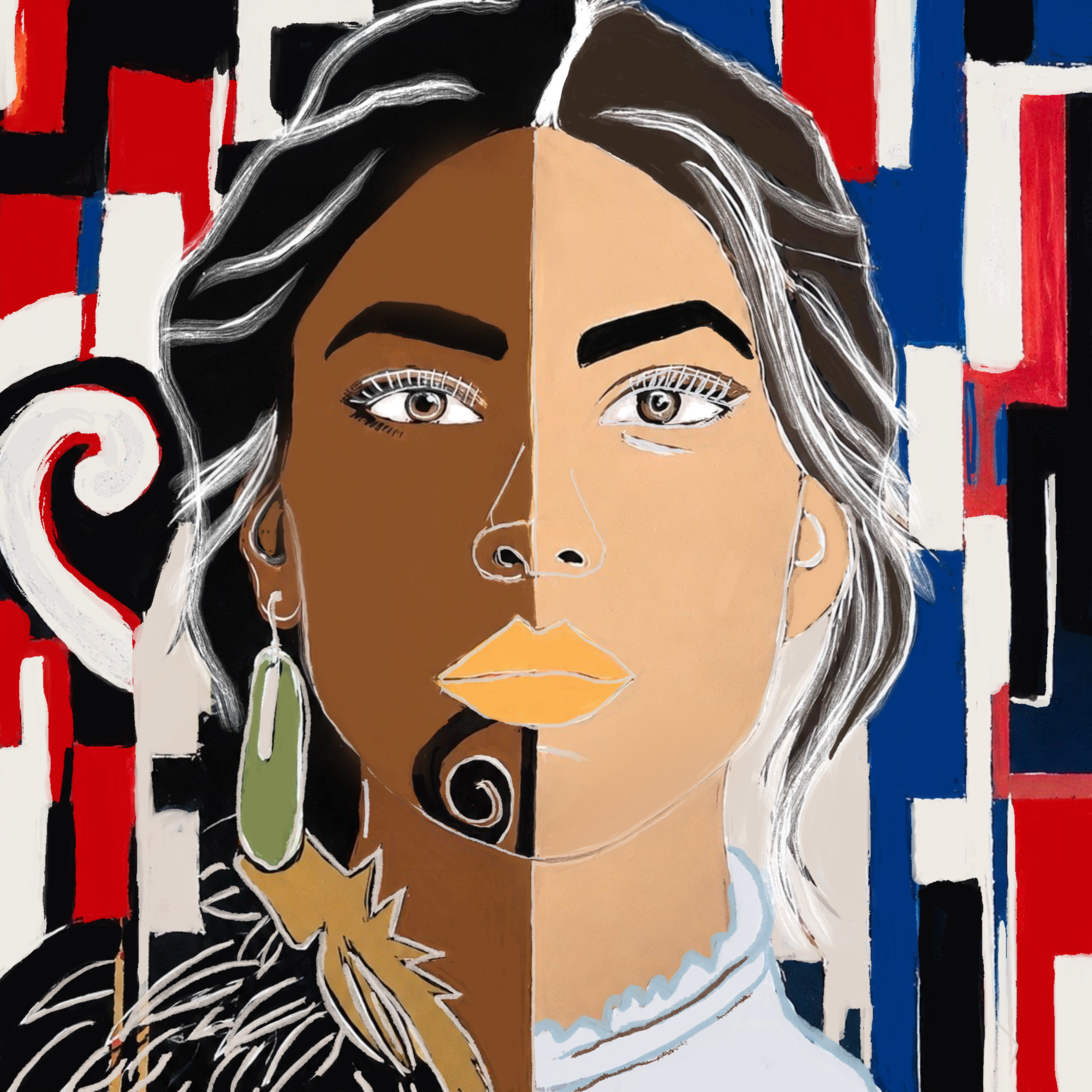
THE LINE
A reflection on identity, belonging, and living between and within two worlds. Through bold colour and graphic form, The Line explores my experiences of being Māori and European through the abstracted symbolism of the Māori flag, Tino Rangatiratanga, and the Union Jack. The Māori flag Tino Rangatiratanga represent Māori identity, sovereignty, and cultural belonging, while the Union Jack signifies my European heritage and colonial history connected to it. Clothing functions as a symbol of the body and personal identity, suggesting how culture is worn, inherited and expressed. The flags are treated as abstract visual elements rather than literal emblems, bringing together contrasting colours, shapes, and histories. In this way, the work presents two cultural identities within one person, navigating the space between them while embracing all that makes me whom I am.
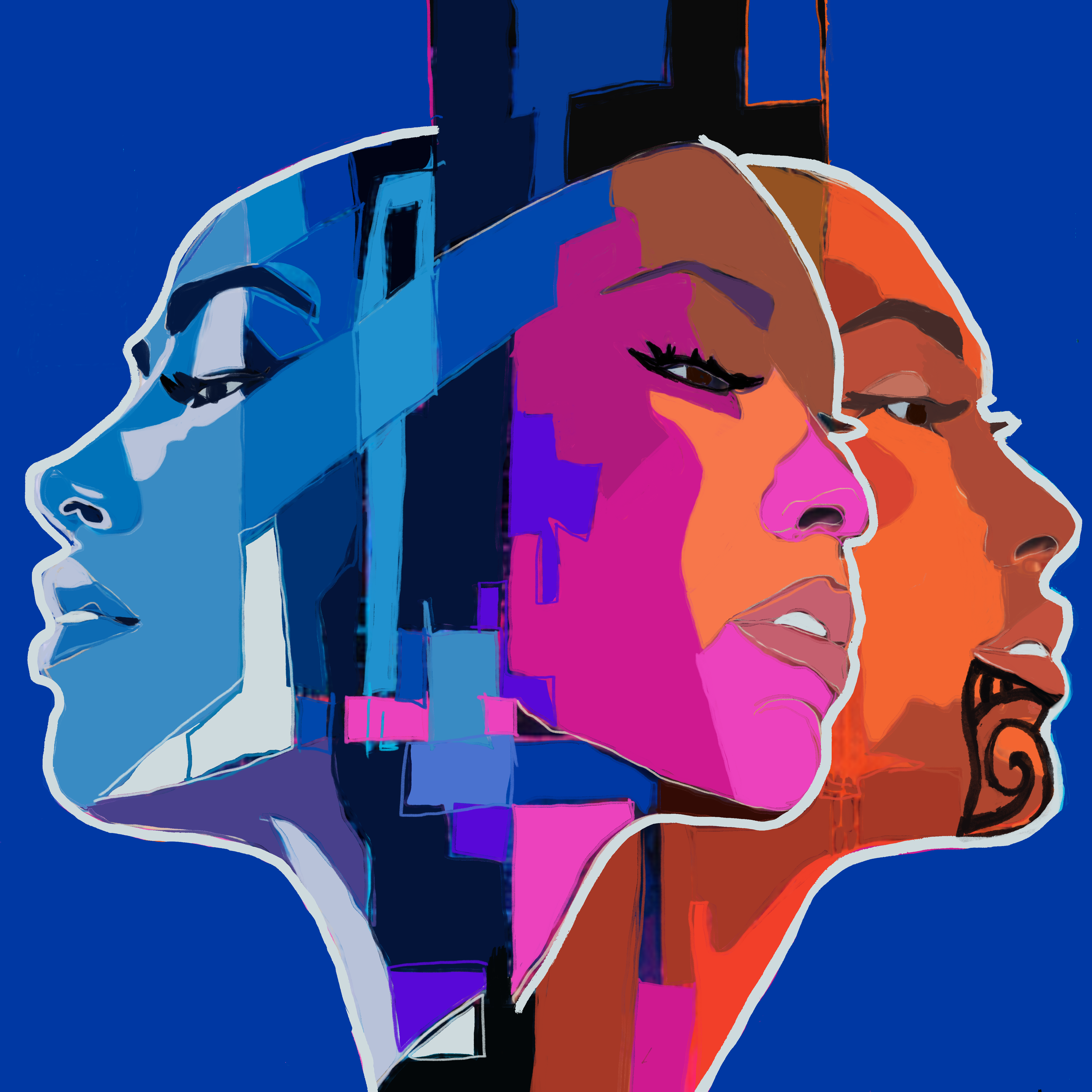
FACES OF PERCEPTION
Growing up between two cultures has shaped how I see myself and how I experience the world. As someone who is both Māori and European, I have always embraced both parts of my heritage. I never felt I had to choose one over the other. In fact, I always felt I had an advantage over everyone else because I was both.
Yet I became aware that people often perceived me differently depending on who I was with. When I was with Europeans, they tended to see me through the lens of being Māori. When I was with Māori, they tended to see me through the lens of being European. It wasn’t necessarily about acceptance, but about which part of my heritage people noticed first. Those who really knew me, or who simply didn’t feel the need to categorise me, saw me for who I was.
My Māori father taught us to recognise our worth, to stand up for ourselves and never to believe that anyone was better than us. He respected my mother’s European heritage just as she embraced the Māori world. Through them, I learned that two cultures could exist together without one diminishing the other.
Faces of Perception explores the difference between how we see ourselves and how others see us. It considers the assumptions we make about identity, culture and belonging, and how easily we can view someone through a single lens rather than seeing the whole person.
Through bold colour, layered forms and contrasting faces, I explore how identity is shaped not only by how we see ourselves, but also by the perceptions others place upon us. The faces become reflections of different perspectives, while the boundaries between them suggest both separation and connection.
For me, this work is not about being divided between two worlds. It is about embracing both, recognising the richness of each, and understanding that neither tells the whole story of who we are.
Two worlds. One person. Not divided, but carrying the richness, complexity and contradictions of both.